
- Your cart is empty
- Continue Shopping


What Are the Most Effective Muscle Growth Hormones?
Muscle growth doesn’t happen by accident. Behind every increase in muscle size, strength, and recovery is a complex hormonal system working silently in the background. Many people assume muscle growth is only about lifting heavier weights or eating more protein, but science shows that hormones play a central role in how muscle tissue repairs, adapts, and grows over time.
Understanding muscle growth hormones is essential—not just for athletes, but for anyone interested in long-term physical health, recovery, and performance. This guide explains which hormones matter most, how they function in the body, and why balance is more important than extremes.
How Muscle Growth Actually Works
Before discussing specific hormones, it’s important to understand the process of muscle growth itself.
When you train with resistance, tiny micro-tears occur in muscle fibers. The body responds by repairing this damage, making the muscle slightly thicker and stronger than before. This process—known as muscle hypertrophy—is regulated by hormonal signals that control protein synthesis, recovery speed, and tissue regeneration.
Hormones don’t build muscle on their own. Instead, they create an internal environment that allows muscle growth to happen efficiently.
Testosterone: The Primary Anabolic Hormone
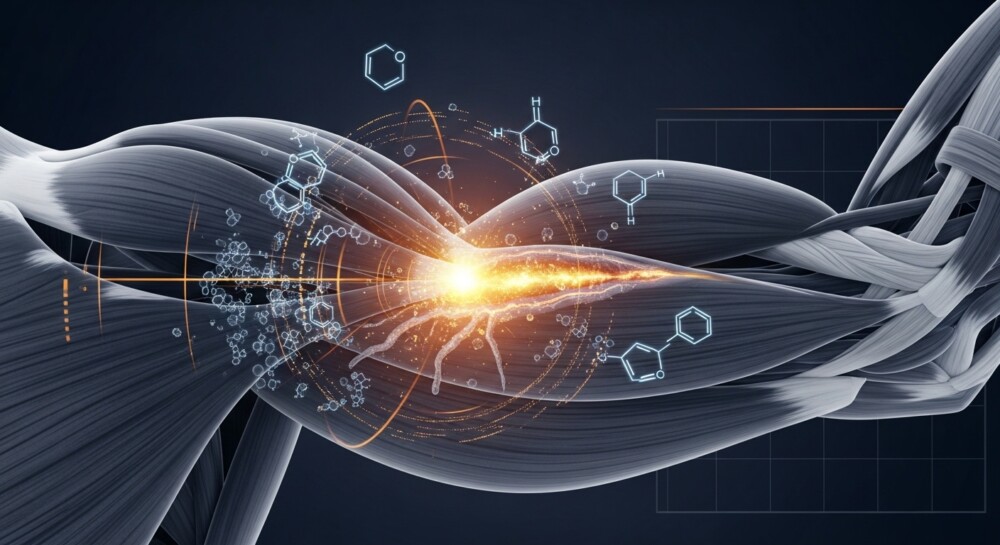
Testosterone is often described as the foundation of muscle growth hormones, and for good reason.
This hormone plays a key role in:
- Increasing muscle protein synthesis
- Supporting strength development
- Enhancing recovery between workouts
- Maintaining muscle mass as men age
Testosterone levels naturally vary between individuals and gradually decline with age. While higher levels are associated with improved muscle-building potential, balance is critical. Both excessively low and abnormally high levels can negatively affect overall health.
From a medical standpoint, testosterone is not just about muscle—it also influences bone density, red blood cell production, mood, and energy levels.
Growth Hormone (HGH): Recovery and Tissue Repair
Human Growth Hormone (HGH) is deeply involved in recovery, regeneration, and tissue repair rather than direct muscle size increases.
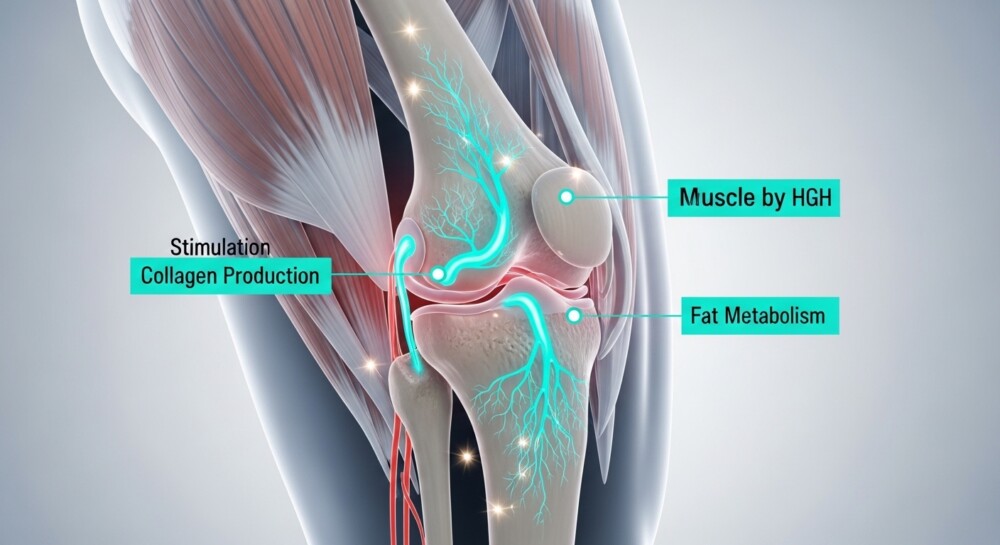
HGH supports muscle growth by:
- Stimulating collagen production in muscles and tendons
- Enhancing recovery after physical stress
- Supporting fat metabolism, which improves body composition
- Promoting overall cellular repair
HGH is especially important during sleep, when natural secretion peaks. Poor sleep quality, chronic stress, or aging can reduce HGH output, slowing recovery and limiting training progress.
Insulin-Like Growth Factor 1 (IGF-1): The Growth Signal
IGF-1 works closely with growth hormone and acts as a powerful signal for muscle cell growth.
Its primary roles include:
- Activating muscle satellite cells (cells responsible for muscle repair)
- Supporting muscle fiber enlargement
- Enhancing nutrient uptake into muscle tissue
IGF-1 is produced in response to growth hormone and plays a major role in long-term muscular development. Without sufficient IGF-1 activity, muscle repair and adaptation become significantly less efficient.
Insulin: Nutrient Delivery Hormone
While insulin is often associated with blood sugar, it is also one of the most anabolic hormones in the human body.
Insulin helps muscle growth by:
- Transporting glucose and amino acids into muscle cells
- Preventing muscle protein breakdown
- Supporting post-workout recovery
However, insulin function depends heavily on metabolic health. Poor insulin sensitivity can impair nutrient delivery to muscles, even with proper training and diet.
Cortisol: The Muscle Breakdown Hormone
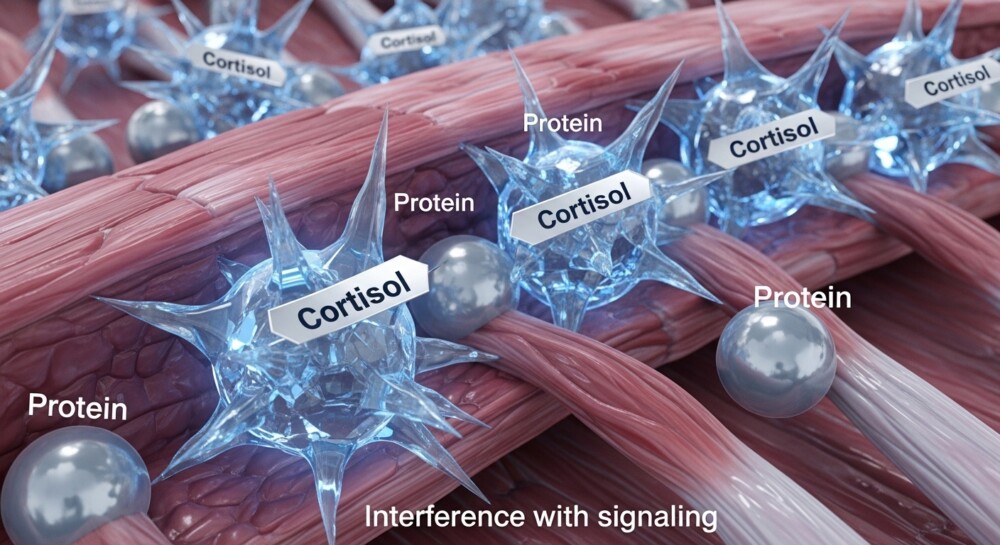
Cortisol deserves special attention—not because it builds muscle, but because it can limit muscle growth when poorly regulated.
Cortisol is released during stress and:
- Increases muscle protein breakdown
- Reduces recovery capacity when chronically elevated
- Interferes with anabolic hormone signaling
Cortisol is not inherently bad. Short-term increases are normal and necessary. Problems arise when stress, poor sleep, or overtraining keep cortisol levels elevated for long periods.
Estrogen: Balance Matters in Men Too
Estrogen is often misunderstood, especially in male physiology. In reality, estrogen plays an important role in:
- Joint and connective tissue health
- Muscle recovery
- Cardiovascular function
Both excessively high and abnormally low estrogen levels can negatively affect muscle performance and overall health. Hormonal balance—not suppression—is the key factor.
Why Hormonal Balance Matters More Than Any Single Hormone
One of the biggest misconceptions in muscle building is focusing on a single hormone while ignoring the rest. Muscle growth depends on hormonal coordination, not isolated increases.
Optimal muscle development occurs when:
- Anabolic hormones are supported
- Recovery hormones function properly
- Catabolic hormones remain controlled
- Sleep, nutrition, and training stress are balanced
Disrupting one hormone often affects others, which is why long-term results depend on systemic balance rather than extremes.
Supporting Healthy Muscle Growth Hormones Naturally
From a health-focused perspective, muscle growth hormones are strongly influenced by lifestyle factors:
- Resistance training stimulates anabolic hormone release
- Quality sleep supports HGH and recovery
- Proper nutrition fuels hormone production
- Stress management keeps cortisol in check
These foundations are essential regardless of training level or goals.
Final Thoughts
Muscle growth hormones form a sophisticated biological network that controls how the body adapts to training. Testosterone, growth hormone, IGF-1, insulin, cortisol, and estrogen all play unique and interconnected roles.
Understanding how these hormones function—rather than obsessing over one—leads to smarter training decisions, better recovery, and long-term health. Muscle growth is not just about lifting more weight; it’s about creating the right internal environment for the body to improve safely and sustainably.

