



What Is Testosterone Replacement Therapy (TRT)?
Testosterone Replacement Therapy (TRT) is often misunderstood because it sits at the intersection of medicine, aging, and performance. Many online discussions oversimplify it, presenting TRT as either a miracle cure or a dangerous shortcut. In reality, TRT is a clinically established hormonal therapy developed to treat men whose bodies can no longer maintain adequate testosterone levels.
This article explains TRT the way an experienced clinician or researcher would—by focusing on physiology, evidence, and long-term outcomes rather than hype. Understanding TRT properly helps men make informed, safe, and ethical health decisions.
What Exactly Is Testosterone Replacement Therapy (TRT)?
Testosterone Replacement Therapy is a medically supervised treatment used to correct pathologically low testosterone levels, not to enhance normal hormone function. It is prescribed only after a proper diagnostic evaluation confirms hypogonadism.
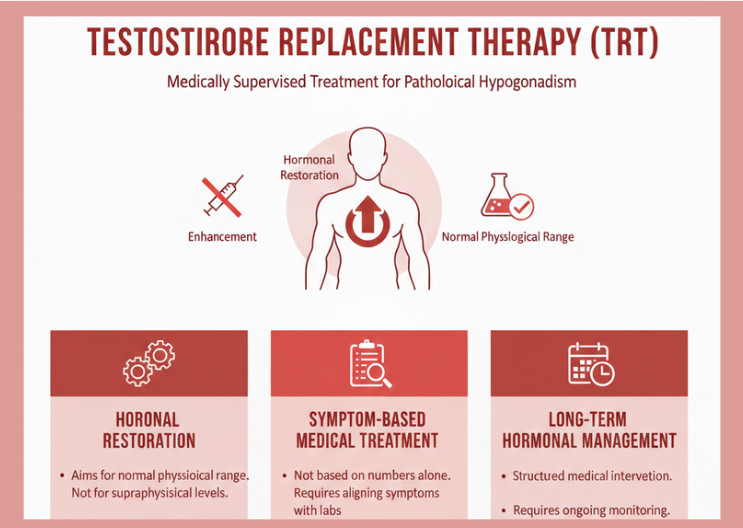
In clinical practice, TRT serves three primary purposes:
- Hormonal restoration rather than enhancement
TRT aims to bring testosterone levels back into a normal physiological range, comparable to healthy adult levels. It does not push levels beyond what the body would naturally sustain, which is a critical distinction from anabolic steroid misuse. - Symptom-based medical treatment
Doctors do not prescribe TRT based on numbers alone. Symptoms such as persistent fatigue, low libido, muscle loss, depressive mood, and cognitive decline must align with laboratory findings for TRT to be considered appropriate. - Long-term hormonal management
TRT is not a short-term stimulant. It is a structured medical intervention that often requires ongoing monitoring, dose adjustments, and regular blood work to maintain safety and effectiveness.
When viewed through a medical lens, TRT is comparable to thyroid hormone replacement or insulin therapy—it addresses a biological deficiency, not a lifestyle choice.
Why Testosterone Is Critical for Overall Male Health
Testosterone is a foundational hormone that affects nearly every major system in the male body. Its influence extends far beyond sexual health, shaping physical strength, mental clarity, metabolic function, and emotional stability.
From a physiological perspective, testosterone plays several interconnected roles:
- Musculoskeletal integrity and strength
Testosterone supports muscle protein synthesis and helps preserve lean muscle mass. When levels decline, muscle loss accelerates, and recovery from physical stress becomes more difficult. - Neurological and cognitive function
Adequate testosterone contributes to motivation, focus, and emotional regulation. Low levels are frequently associated with brain fog, irritability, and reduced mental resilience. - Metabolic and cardiovascular support
Testosterone influences fat distribution, insulin sensitivity, and red blood cell production. Deficiency can increase the risk of fat gain, low energy, and reduced exercise tolerance.
Because testosterone decline is often gradual, men may normalize these symptoms for years before realizing a hormonal imbalance is present.
Common Causes of Low Testosterone in Men
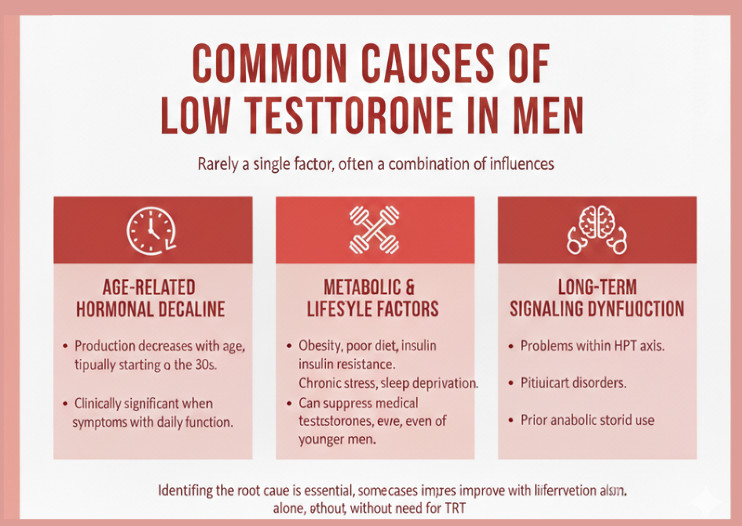
Low testosterone is rarely caused by a single factor. In most cases, it develops due to a combination of biological, lifestyle, and environmental influences.
Clinically, the most common contributors include:
- Age-related hormonal decline
Testosterone production naturally decreases with age, typically starting in the early 30s. While this decline is normal, it becomes clinically significant when symptoms interfere with daily function. - Metabolic and lifestyle factors
Obesity, poor diet, insulin resistance, chronic stress, and sleep deprivation can significantly suppress testosterone production—even in younger men. - Hormonal signaling dysfunction
Problems within the hypothalamic–pituitary–testicular (HPT) axis can disrupt testosterone production despite healthy testes. This includes pituitary disorders or prior anabolic steroid use.
Identifying the root cause is essential, as some cases of low testosterone can improve through lifestyle intervention alone, without the need for TRT.
How TRT Works Inside the Body
TRT introduces testosterone into the bloodstream, allowing it to bind to androgen receptors in muscles, bones, the brain, and reproductive tissues. Once bound, testosterone activates gene expression responsible for strength, energy, libido, and hormonal balance.
However, the body operates on a feedback system. When external testosterone is introduced:
- The hypothalamus senses adequate hormone levels
- Pituitary signaling is reduced
- Natural testosterone production in the testes decreases
This mechanism is expected. It does not mean TRT is harmful, but it does explain why medical supervision is essential, especially for fertility planning and long-term health management.
Who Is a Medically Appropriate Candidate for TRT?
TRT is intended for men who meet strict diagnostic criteria, not those seeking optimization or enhancement. Ethical prescribing requires both laboratory confirmation and clinical symptoms.
Appropriate candidates typically demonstrate:
- Consistently low testosterone levels confirmed through multiple morning blood tests
- Clear physical and psychological symptoms affecting quality of life
- Exclusion of reversible causes, such as sleep apnea, obesity, or medication side effects
Without these factors, TRT may offer little benefit and unnecessary risk.
What TRT Is Often Confused With
A major source of misinformation is the confusion between TRT and anabolic steroid abuse. While both involve testosterone, their intent and medical context are entirely different.
Anabolic steroid abuse uses supraphysiological doses to exceed natural limits, often leading to cardiovascular strain, endocrine damage, and psychological instability. TRT, when practiced responsibly, remains within medically accepted ranges and prioritizes long-term health.
Failing to distinguish between these two practices leads to dangerous self-treatment and poor medical decisions.
Benefits of TRT When Properly Managed
When TRT is prescribed appropriately and paired with healthy habits, many men experience meaningful improvements in daily function and well-being.
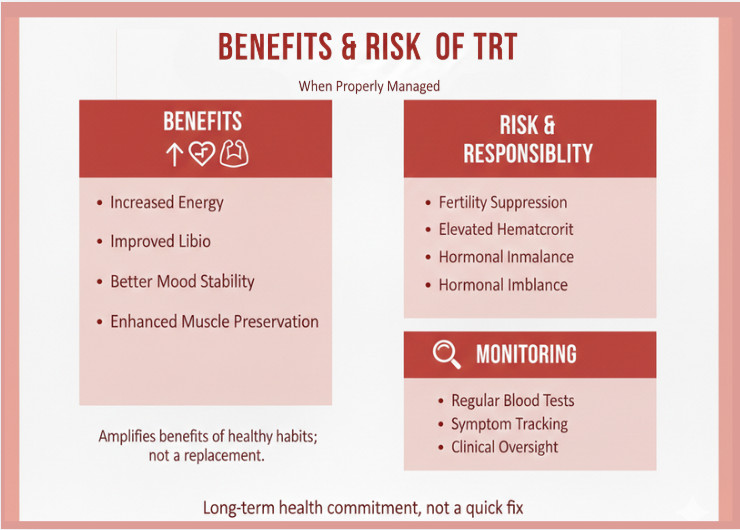
Commonly reported benefits include increased energy, improved libido, better mood stability, and enhanced muscle preservation. These effects typically develop gradually over weeks or months, not overnight.
It is crucial to understand that TRT amplifies the benefits of good sleep, nutrition, and exercise—it does not replace them.
Risks, Monitoring, and Long-Term Responsibility
Like all hormone therapies, TRT carries potential risks, including fertility suppression, elevated hematocrit, and hormonal imbalance if improperly managed. These risks are manageable with proper monitoring and individualized dosing.
Regular blood tests, symptom tracking, and clinical oversight are not optional—they are essential components of safe TRT practice. Men considering TRT must approach it as a long-term health commitment, not a quick fix.
Final Expert Insight
Testosterone Replacement Therapy is a powerful medical tool when used correctly and a serious liability when misused. It should never be started casually or without a full understanding of its physiological implications.
When guided by evidence, ethics, and medical expertise, TRT does not create superhuman results—it restores balance, function, and quality of life where hormonal deficiency once existed.

